
The HVAC Business Cash Flow Problem Has a Name. And a Fix.
Summer is chaos. Spring and fall feel like the wheels might come off. And through it all, you're watching the bank account like it might disappear. Right Way Profits builds the cash management system that makes seasonal HVAC cash flow manageable — and profit predictable.
HVAC Cash Flow Is Different.
Your Financial Partner Should Be, Too.

If you've ever had a killer summer: trucks running nonstop, techs maxed out, revenue coming in fast–yet still felt financially behind by October, you know this well.
HVAC cash flow doesn't follow a straight line. It follows the weather. That means the financial systems that work for other businesses, even other trades, don't always translate.
Here's what we see in HVAC businesses specifically:
- The busy season generates cash fast — but it goes out just as fast in payroll, parts, equipment, and vehicles
- The shoulder seasons (spring and fall) create real cash crunches because revenue drops before expenses do
- Tax season hits right at the end of the slow period — the worst possible time
- Owner's pay gets deprioritized during the slow season and never quite catches up
None of this is inevitable. It's a cash management problem. And there's a system that fixes it.
Profit First, Built for the HVAC Seasonal Model
Profit First works by setting aside a percentage of every deposit into separate accounts before anything else gets paid. The system forces the business to live within its means, with profit protected from day one.
For HVAC businesses, the implementation has to account for seasonal revenue patterns.
As a Profit First Master Certified Professional, Debbie Deknight knows how to set the right allocation percentages for an HVAC company's cost structure, so the system works the way it's supposed to through every season of the year.
Get StartedHow we work with HVAC Business Owners

Monthly Bookkeeping
Accurate bookkeeping that tracks job costs, seasonal labor, equipment, and overhead the way your business operates, not the way a generic chart of accounts is set up.

Profit First Implementation
Set up and ongoing management of the game-changing Profit First cash allocation system, calibrated for your specific revenue patterns and cost structure.

Advisory Services
Monthly financial review, cash flow planning, and 'what does this mean for my business' guidance, not just a report handed off and forgotten.

Clean-Up & Catch-Up
If the books are behind, we will help you get the up to date and in good condition. No judgment about how it happened. We start from where you are.
Not Sure Where Your HVAC Finances Stand?
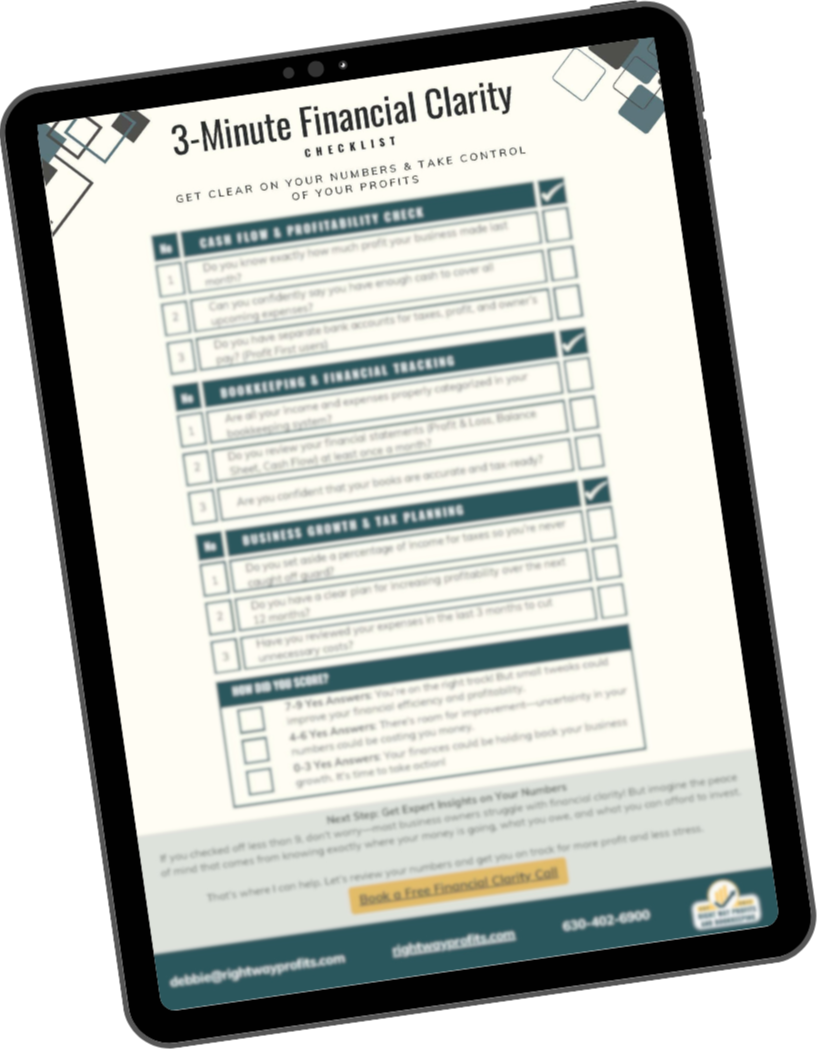
Start with the free 3-Minute Financial Clarity Checklist. Nine questions, three minutes, a clear picture of where your cash flow gaps are.